Report: Dietary Adjustments May Help Improve Energy Levels
07/20/2026 / By Petra Stone

Overview: Fatigue and Diet
Fatigue is a widespread complaint, and health experts frequently recommend dietary modifications as a first-line strategy to improve energy levels, according to recent reports. Millions of individuals struggle with low energy due to poor dietary choices, dehydration, and nutrient deficiencies, according to NaturalNews.com. The same source notes that fueling the body with the right foods can make a measurable difference in energy, focus, and overall well-being. [1]
Unlike many other symptoms, fatigue is often not treated medically but rather through adjustments in diet and lifestyle, according to the book “100 Questions & Answers About Breast Cancer” by Zora K. Brown, LaSalle D. Leffall, and Elizabeth Platt. The authors explain that fatigue is a symptom that comes and goes and usually reflects the body’s exertion as it attempts to heal. [2] Medical officials cited in various sources emphasize that while individual results vary, dietary changes remain a widely cited approach for combating tiredness.
Balanced Diet and Carbohydrate Choices
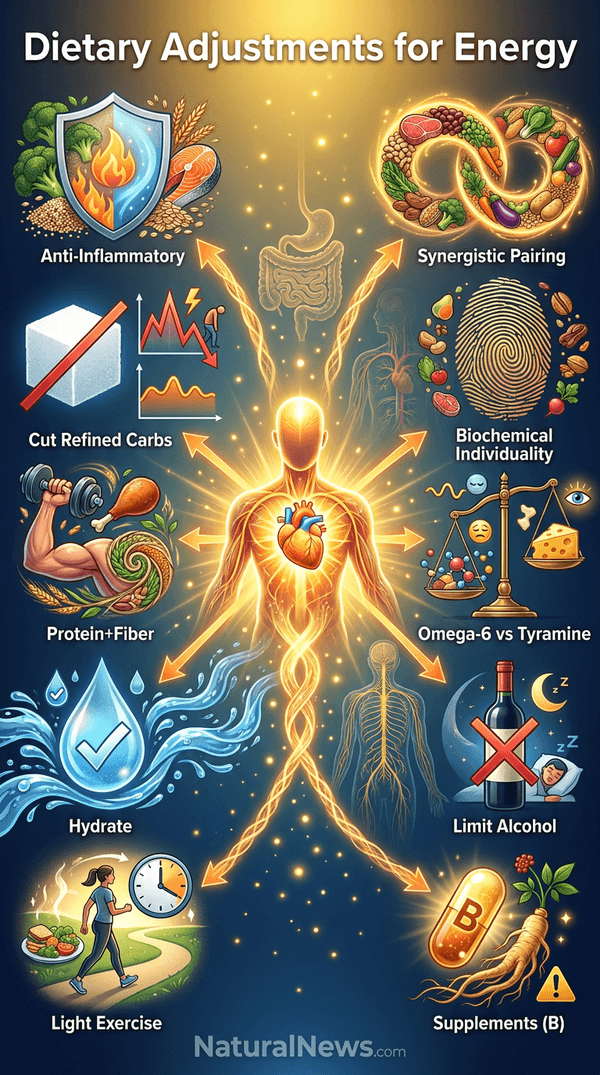
Anti-inflammatory foods such as whole grains, vegetables, and omega-3 fatty acids may help reduce fatigue, according to some studies, though more research is needed. The book “Depression Free for Life: An All-Natural 5-Step Plan to Reclaim Your Zest for Living” by Gabriel Cousens with Mark Mayell recommends eating primarily foods low in saturated fats and high in fresh vegetables, fruits, and grains. The authors advise avoiding processed snack foods and refined polyunsaturated oils, which can inhibit absorption of essential fatty acids. [3]
Limiting refined carbohydrates and avoiding overeating are advised to prevent postprandial drowsiness. According to an article in NaturalNews.com titled “Use Lifestyle Remedies to Counteract Depression,” eliminating sugar and refined carbohydrates from food and drinks can help stabilize blood sugar levels and improve energy. [4] Another NaturalNews.com article, “The Hidden Culprits of Chronic Fatigue,” reports that higher levels of certain omega-6 fatty acids and other metabolites were linked to increased sleepiness, while compounds like tyramine from aged and fermented foods were associated with alertness. [5] These findings suggest that carbohydrate quality and overall dietary composition play a role in energy regulation.
Protein Intake and Hydration
Adequate protein intake is essential for maintaining muscle mass and supporting energy metabolism, according to nutrition experts. The book “The Best Supplements for Your Health” by Donald P. Goldberg emphasizes that each individual has unique nutrient requirements, a concept known as biochemical individuality. [6] An article on NaturalNews.com titled “PROTEIN and FIBER: Essential macronutrients for optimal health” states that protein works synergistically with fiber to support metabolic health and muscle maintenance. [7] While specific numerical recommendations vary, the Dietary Guidelines for Americans generally advise 1.2 to 1.6 grams of protein per kilogram of body weight daily.
Hydration is also closely linked to fatigue. According to experts cited in NaturalNews.com, dehydration is a common factor in low energy levels. [1] The article “How Your Diet Speaks Volumes About Your Health — and How to Listen” lists persistent fatigue as a sign of an unhealthy diet, which can include inadequate fluid intake. [8] Health officials recommend approximately 9 cups of water per day for women and 13 cups for men to maintain adequate hydration and reduce tiredness.
Physical Activity, Supplements, and Alcohol
Light physical activity, such as walking for 20 minutes after meals, may help maintain stable blood sugar levels, research indicates. In the context of fatigue management, exercise has been shown to improve energy. The book “Fatigue in Multiple Sclerosis: A Guide to Diagnosis and Management” by Lauren B. Krupp reports that patients assigned to exercise training showed significant increases in respiratory measures and a 17% increase in sport-related activity, with a trend toward reduced fatigue. [9]
Supplements such as ginseng and B vitamins have been linked to improved stamina, though officials caution they can cause side effects and interact with medications. The book “Natural Health Remedies” by Janet C. Maccaro lists B-complex vitamins among recommendations for stress relief and energy support. [10] However, health officials advise careful supplementation under professional guidance.
Limiting alcohol consumption is recommended to avoid drowsiness and fatigue. According to a report published by NaturalNews.com, eliminating sugar and refined carbohydrates — which often accompany alcohol intake — can help stabilize energy levels. [4] The same source notes that alcohol can disrupt sleep and contribute to feelings of tiredness.
Summary of Dietary Energy Strategies
Health officials emphasize that individual results may vary based on underlying conditions and the duration of fatigue. However, eight dietary strategies are widely cited by experts: eating a balanced diet rich in whole foods, ensuring adequate protein intake, choosing complex carbohydrates over refined ones, controlling portion sizes, staying hydrated, engaging in post-meal movement, using supplements cautiously, and reducing alcohol consumption. [1][8]
While no single approach works for everyone, these adjustments are frequently recommended as a foundation for improving energy levels. The provided sources collectively suggest that dietary modifications, combined with lifestyle changes, offer a practical strategy for managing fatigue.
References
- NaturalNews.com. “Natural energy boosters: Top foods to combat fatigue and stay energized.” February 15, 2026.
- Zora K. Brown, LaSalle D. Leffall, Elizabeth Platt. “100 Questions & Answers About Breast Cancer.”
- Gabriel Cousens with Mark Mayell. “Depression Free for Life: An All-Natural 5-Step Plan to Reclaim Your Zest for Living.”
- NaturalNews.com. “Use Lifestyle Remedies to Counteract Depression.” July 9, 2009.
- Willow Tohi. “The Hidden Culprits of Chronic Fatigue.” NaturalNews.com. October 22, 2025.
- Donald P. Goldberg. “The Best Supplements for Your Health.”
- NaturalNews.com. “PROTEIN and FIBER: Essential macronutrients for optimal health.” March 29, 2026.
- Evangelyn Rodriguez. “How Your Diet Speaks Volumes About Your Health—and How to Listen.” NaturalNews.com. March 8, 2026.
- Lauren B. Krupp. “Fatigue in Multiple Sclerosis: A Guide to Diagnosis and Management.”
- Janet C. Maccaro. “Natural Health Remedies.”
Explainer Infographic
Submit a correction >>
Tagged Under:
alternative medicine, dietary guidelines, eating patterns, food cures, food is medicine, food science, fruits, grocery cures, health science, healthy eating, heart health, kidney disease, natural cures, natural health, natural medicine, organics, remedies, research, tips, veggie
This article may contain statements that reflect the opinion of the author
RECENT NEWS & ARTICLES