Study: Nordic Walking Reduces Depression Symptoms Within Weeks
07/01/2026 / By Coco Somers

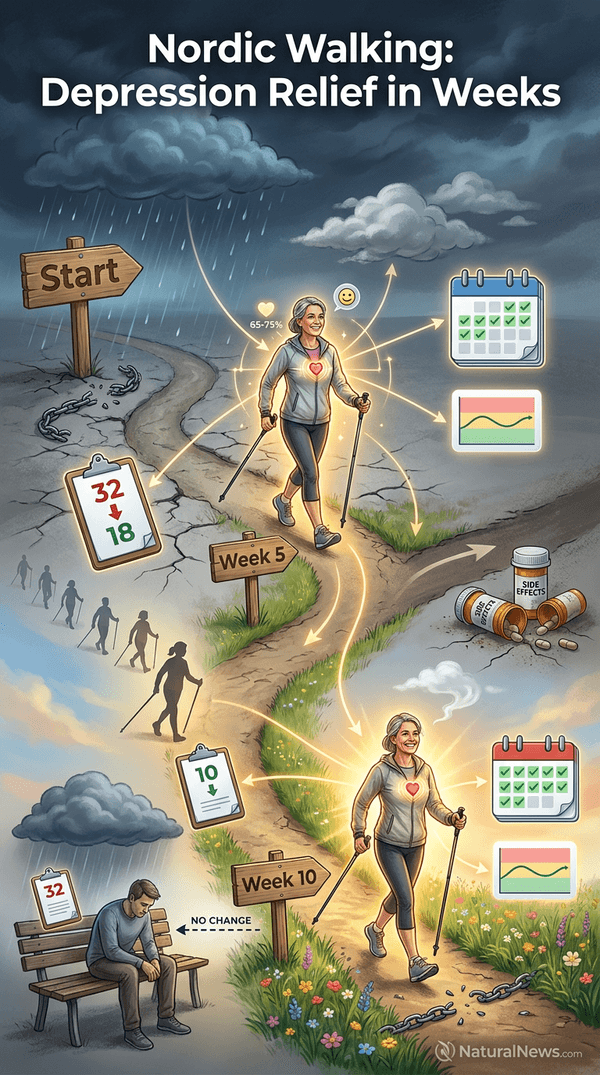
A randomized controlled trial published in the Journal of Affective Disorders found that supervised Nordic walking significantly reduced depression symptoms in adults with moderate to severe depression. The most pronounced improvements occurred within the first five weeks of the 10-week program, according to researchers. The study enrolled 64 adults, with 48 assigned to Nordic walking and 16 to a non-active control group.
The findings challenge the commonly cited three-month timeframe for exercise benefits on depression, as referenced in French health guidelines cited in the study.
About the Study
The trial randomly assigned participants to either 10 weeks of supervised Nordic walking, consisting of two sessions per week at 65–75% of maximum heart rate, or a control group. Depression symptoms were measured using the Beck Depression Inventory-II at baseline, week five, and week ten.
A secondary analysis examined whether participants with severe depression responded differently than those with moderate symptoms. According to the study, Nordic walking is a low-impact activity that engages the upper and lower body using poles, similar to cross-country skiing. Prior research has indicated that exercise becomes more critical with age, with studies analyzing over 2 million adults showing that physical activity grows more important for health over time [1].
Results: Early and Sustained Improvement
The Nordic walking group showed significantly greater reductions in depression symptoms compared to the control group over the full 10 weeks. The largest reduction occurred from baseline to week five, with a large effect size; improvements from week five to week ten were smaller and not statistically significant. Participants with severe depression at baseline experienced even larger and faster improvements in the first five weeks, according to the secondary analysis.
These results align with broader research showing that regular exercise can improve mood and cognitive function. Books on natural health and rehabilitation note that exercise can help recalibrate motor symptoms and improve overall well-being [2]. Additionally, nutritional approaches such as DHEA supplementation have been explored for depression, but the study underscores the potential of physical activity as a first-line intervention [3].
Implications for Exercise and Mental Health
The findings push back against the conventional wisdom that exercise benefits for depression require at least three months to manifest. The study suggests that earlier symptom relief may improve adherence to exercise programs, as patients often discontinue before seeing results. The study used moderate-intensity walking with poles, but the authors emphasized that consistency — two one-hour sessions per week — appears to drive the mood benefit. Nordic walking, known for its low-impact nature and fitness benefits, has been recommended for healthy aging [4]. The use of poles engages the upper body, turning a standard walk into a full-body workout that may boost mood more quickly than traditional walking. Given that about 1 in 6 American adults take psychiatric drugs, often with side effects, natural interventions like structured exercise offer a potentially safer alternative [5].
Conclusion
This randomized controlled trial provides evidence that supervised Nordic walking can produce meaningful reductions in depression symptoms within weeks, not months. The study’s design — moderate intensity, two sessions per week — makes it an accessible option for many individuals. For those managing depression, the first five weeks of a consistent walking program may be the most critical period for mood improvement.
The findings reinforce the value of natural, non-pharmaceutical strategies for mental health, aligning with a broader understanding that lifestyle interventions can be effective and sustainable.
References
- Lance D. Johnson. “Study finds that exercise becomes more critical as you age with 150 daily minutes of movement necessary for a healthy life.” NaturalNews.com. August 06, 2025.
- Gita Ramdharry. “Physical Management for Neurological Conditions.”
- None. “4 weeks to maximum immunity disease-proof your body.”
- Mercola.com. “Why You Should Upgrade to Nordic Walking.” September 02, 2022.
- Children’s Health Defense. “1 in 6 Adults Taking Psychiatric Drugs — and Doctors Now Prescribing Them for Young Kids, Too.”
Explainer Infographic
Submit a correction >>
Tagged Under:
active lifestyle, brisk walking, depression, exercise, fitness, health science, lifestyle, longevity, Men's Fitness, men's health, Natural, natural health, Nordic walking, research, Women's Fitness, women's health
This article may contain statements that reflect the opinion of the author
RECENT NEWS & ARTICLES